

A Journey Through the Heart of the Rogue
Every city has a story, and in Medford, Oregon, that story is written into the brick buildings, historic theaters, tree-lined neighborhoods, and charming streets that have stood the test of time.
What began as a small railroad town in the 1880s grew into the bustling heart of Southern Oregon, shaped by the arrival of the railroad, the Rogue Valley’s booming orchard industry, and generations of entrepreneurs, artists, and community leaders.
Today, many of Medford’s historic landmarks have found new life as restaurants, theaters, businesses, and gathering places, while others remain beautifully preserved reminders of the city’s past.
Take a walk through Medford’s past and discover the places that helped shape the city we know today.
A Brief History of Medford, Oregon
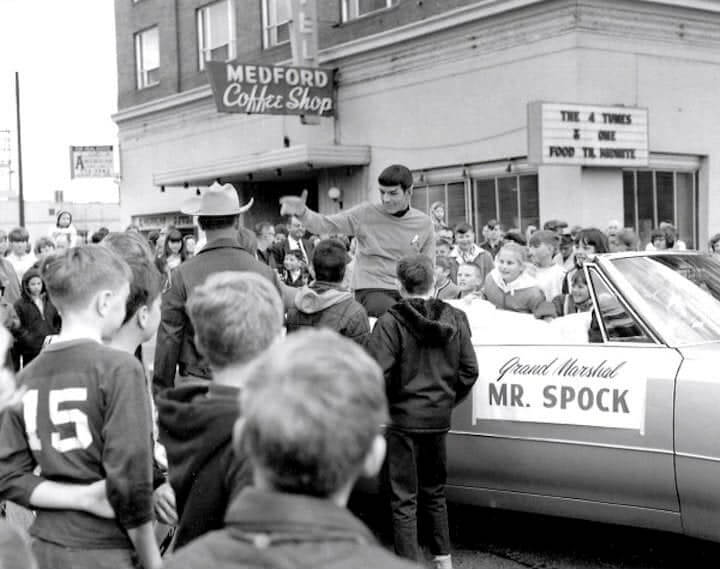
Medford’s story began in 1883, when the Oregon and California Railroad selected a route through the heart of the Rogue Valley. Landowners provided property for a new railroad depot and townsite, and a community quickly emerged around the tracks. Named after Medford, Massachusetts, the hometown of railroad engineer David Loring, the new settlement welcomed its first train in 1884 and officially incorporated in 1885.
With railroad access connecting the Rogue Valley to markets throughout the country, Medford quickly became a center for trade, agriculture, and commerce.
The early 1900s brought an extraordinary period of growth known as the Orchard Boom. Investors flocked to Southern Oregon to establish apple and pear orchards, bringing new residents, businesses, and prosperity. Between 1900 and 1910, Medford’s population grew dramatically, and impressive brick storefronts, elegant residences, theaters, and public buildings began replacing the town’s original wooden structures.
Medford continued to evolve throughout the 20th century. It became the Jackson County seat in the 1920s, played an important role in World War II through nearby Camp White, and later emerged as a regional center for the timber and healthcare industries.
Today, the city’s historic districts preserve much of that heritage, offering visitors a fascinating glimpse into more than 140 years of Southern Oregon history.
Explore Historic Downtown Medford
Today, the Downtown Medford Historic District is recognized on the National Register of Historic Places, and its walkable streets invite visitors to discover the architectural details and fascinating stories hidden in plain sight.
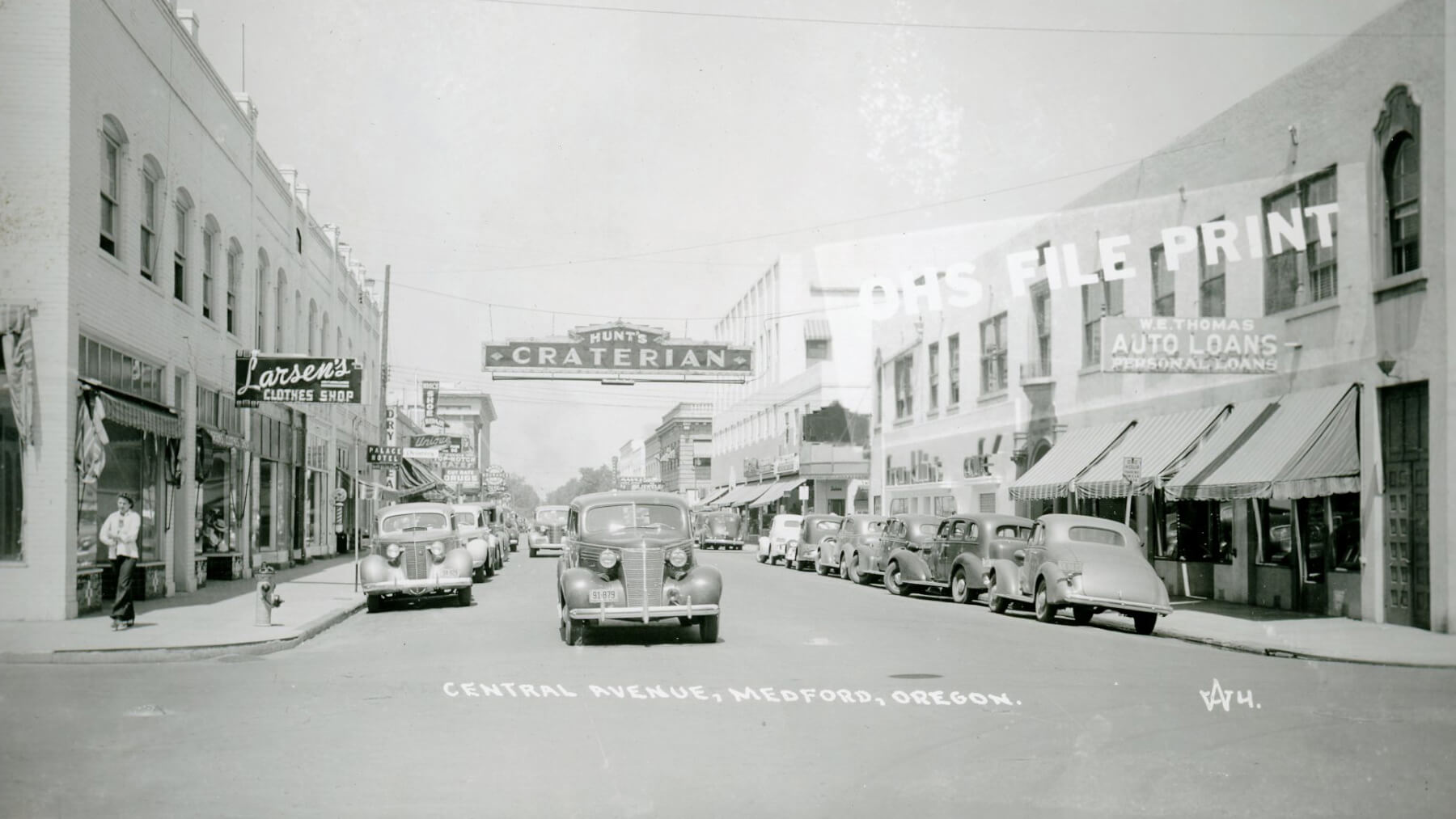
Craterian Theater at the Collier Center for the Performing Arts
23 S Central Ave, Medford, OR 97501
Then: A 1924 theater for silent films, vaudeville, and motion pictures.
Today: A performing arts center featuring concerts, musicals, theatrical productions, and community performances.
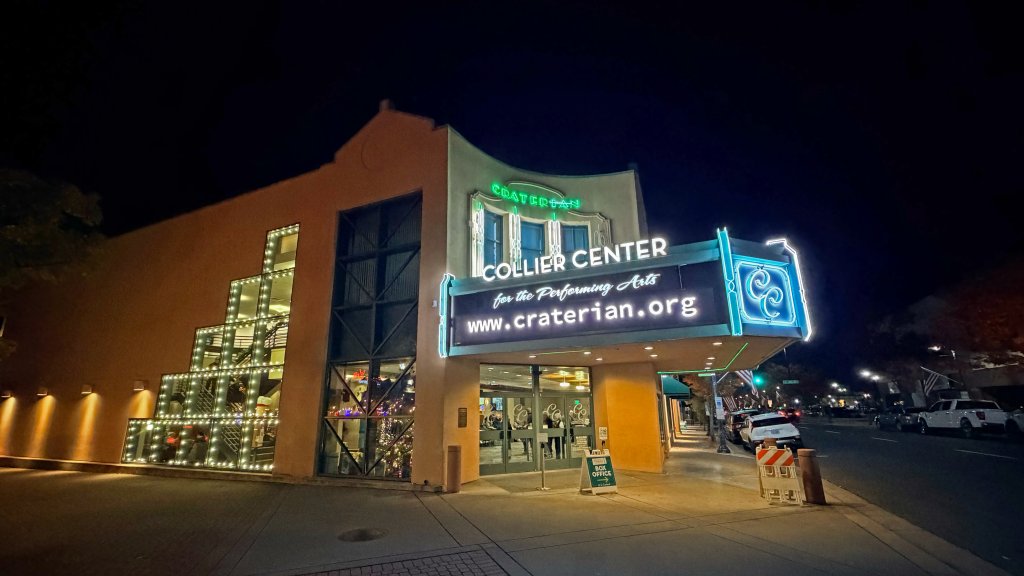
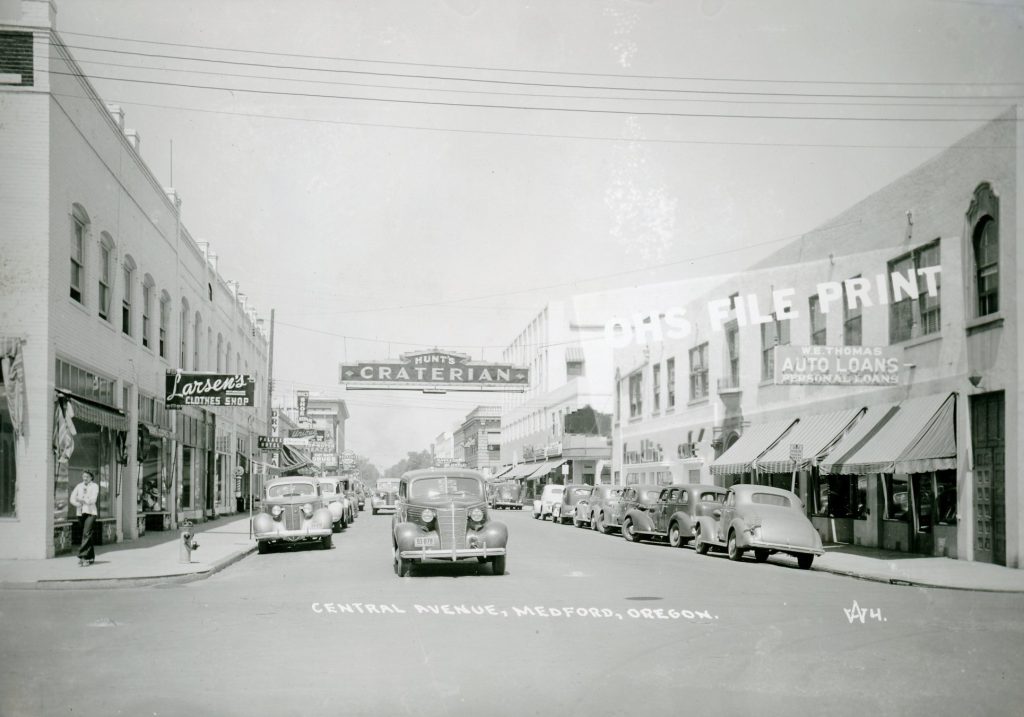
Opened in October 1924 and named in honor of nearby Crater Lake, the Craterian Theater has entertained generations of Southern Oregonians. Throughout its history, the theater hosted everything from silent films and vaudeville performances to World War II bond drives.
Today, the beautifully restored venue continues its legacy as one of Medford’s premier cultural destinations. Catch a live performance and experience nearly a century of entertainment history in the heart of downtown.
Holly Theatre
226 W 6th St, Medford, OR 97501
Then: An elaborate 1930 movie palace.
Today: A restored entertainment venue hosting live concerts, comedy, and performances.
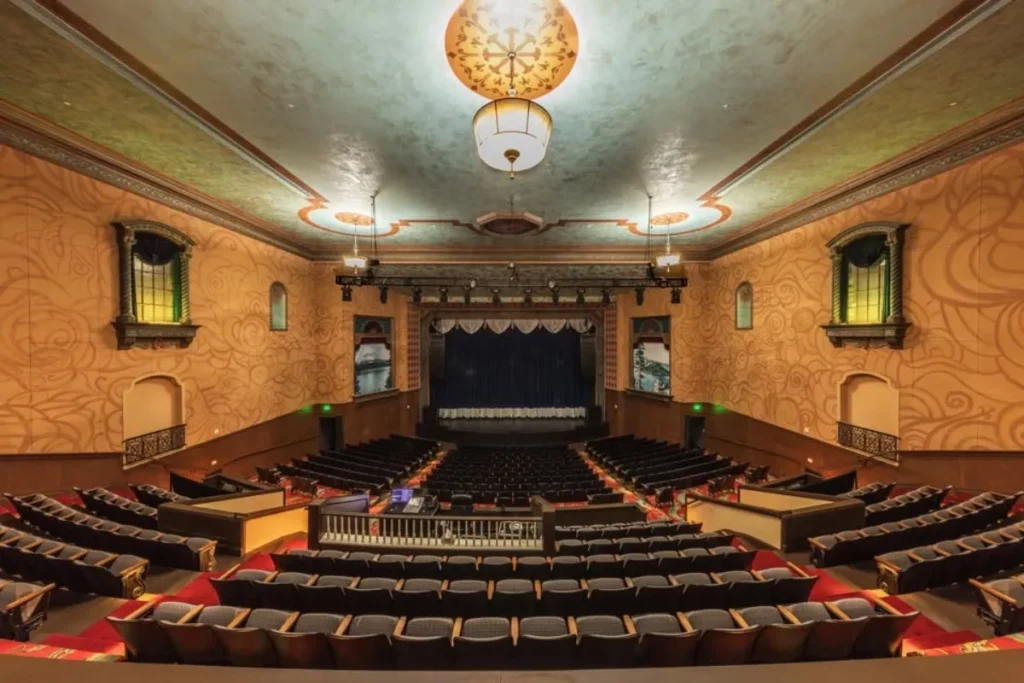
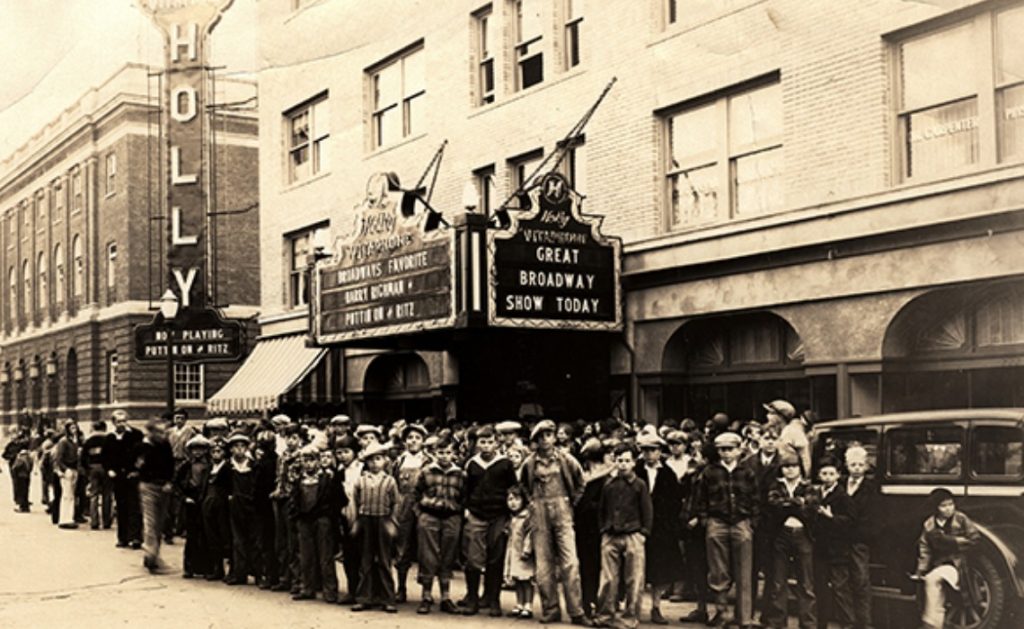
When the Holly Theatre opened on August 29, 1930, it was one of Medford’s most impressive attractions. Its dazzling neon marquee, ornate architecture, and modern amenities made it a centerpiece of downtown entertainment.
After decades of change and an extensive restoration effort, the Holly returned to the spotlight in 2025. Today, visitors can once again enjoy performances inside this historic landmark, experiencing the glamour of its original movie-palace era with modern entertainment.
sparta building
12 North Riverside Avenue, Medford, OR 97501
Then: An early automobile-related commercial building and later the home of pioneering radio station KMED.
Today: A preserved historic commercial landmark.
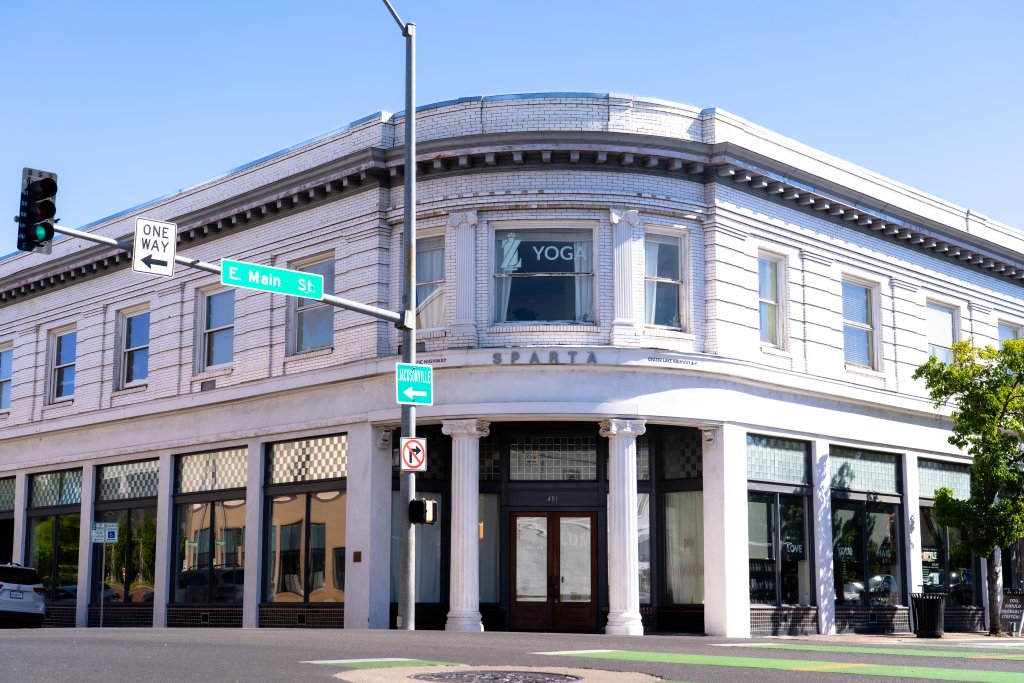
Completed in 1911, the Sparta Building is one of downtown Medford’s notable examples of American Renaissance architecture. Designed by renowned local architect Frank Chamberlain Clark, it became especially significant in 1926–1927 when it housed KMED, a pioneering radio station that helped bring commercial broadcasting to Southern Oregon.
Listed on the National Register of Historic Places in 1992, the building remains a reminder of Medford’s early embrace of new technology and communication.
Wilkinson-Swem Building
217 E Main St, Medford, OR 97501
Then: An early brick commercial building with retail and upper-floor spaces.
Today: A historic downtown commercial property.
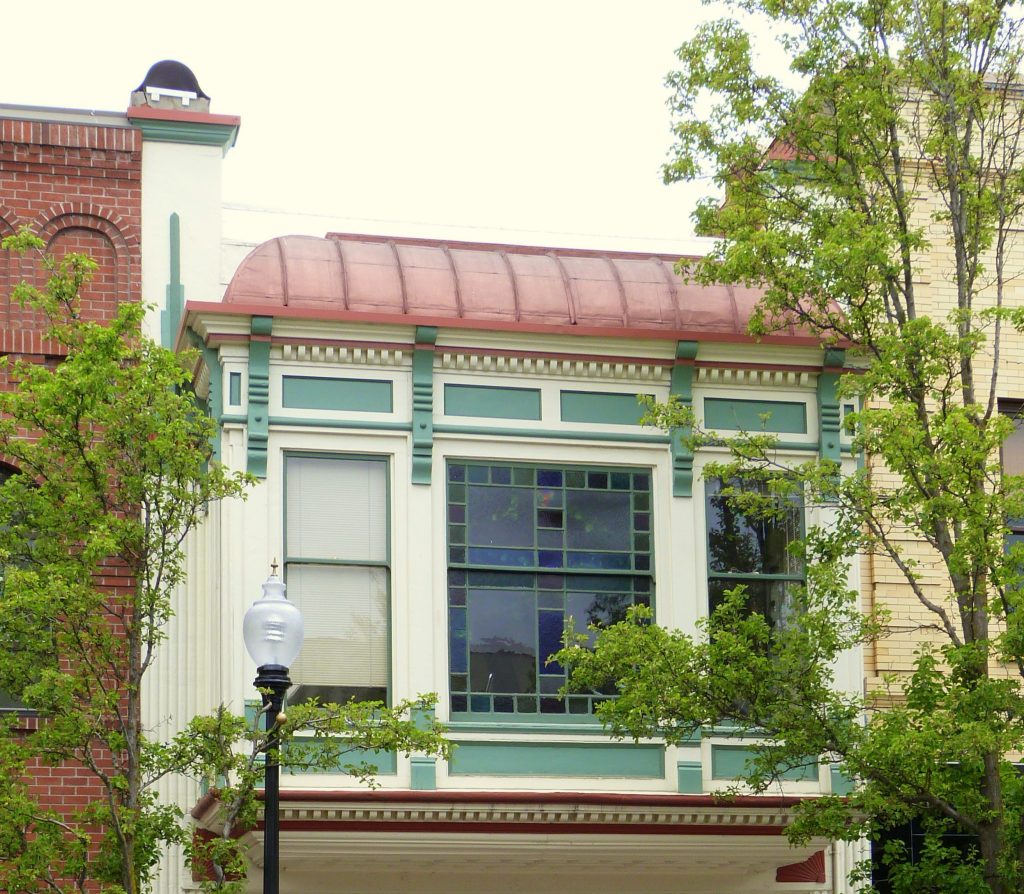
One of the earliest brick buildings constructed along Main Street, the Wilkinson-Swem Building reflects Medford’s transition from a frontier railroad settlement to a permanent commercial center.
Its distinctive Eastlake-style details, including an ornamental bay window and decorative woodwork, make it especially noteworthy. Unlike many neighboring storefronts, the building retained important historic features through the widespread facade renovations of the mid-20th century.
Weeks & Orr Building
114 W Main St, Medford, OR 97501
Then: A downtown commercial building associated with Medford’s early business development.
Today: Part of the historic downtown commercial streetscape.
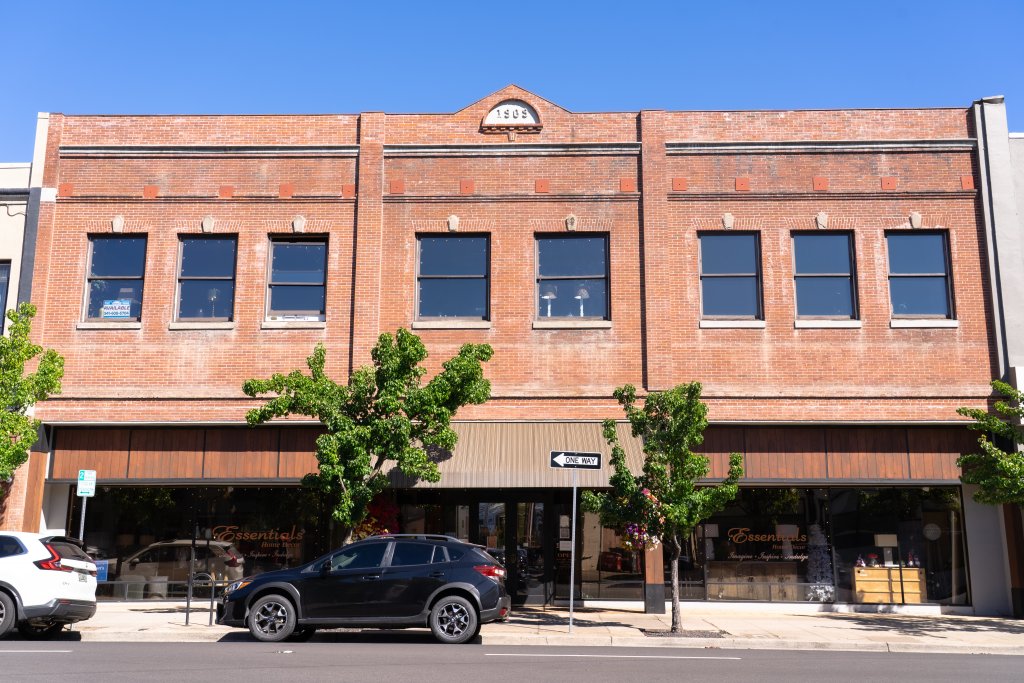
The Weeks & Orr Building represents the generations of merchants and entrepreneurs who helped establish downtown Medford as the Rogue Valley’s commercial center. Its historic storefront contributes to the character of the district, where many former retail and professional buildings have been adapted for modern businesses.
First Presbyterian Church
85 S Holly St, Medford, OR 97501
Then: A church built in 1926 for Medford’s growing Presbyterian congregation.
Today: A historic church property.
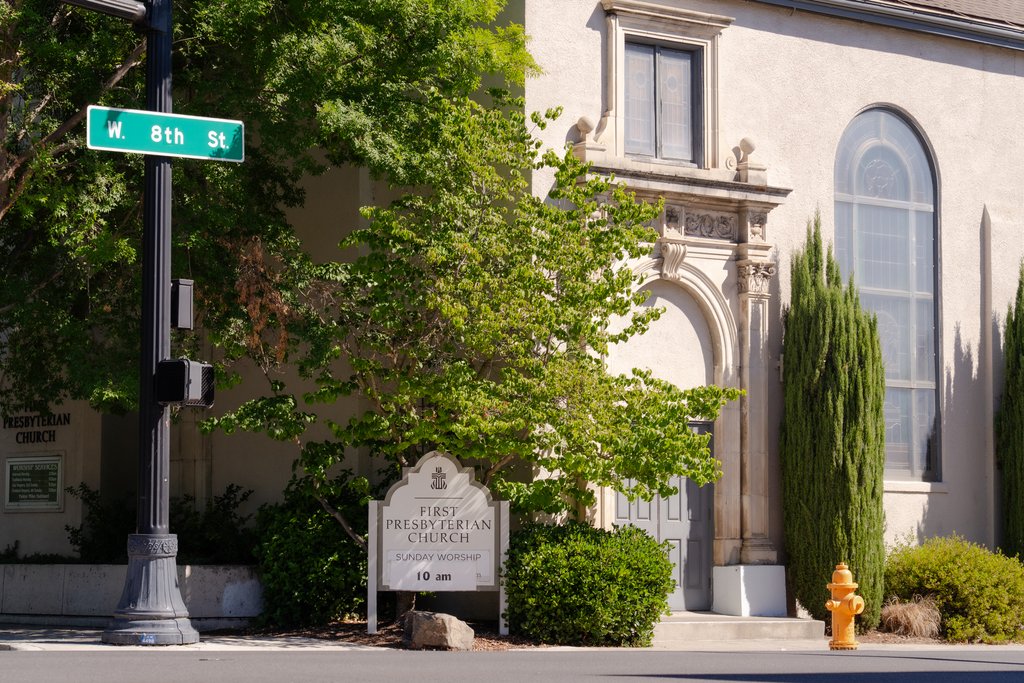
Located at 85 South Holly Street, First Presbyterian Church is a striking example of Spanish Colonial Revival architecture. Its stucco exterior, arched windows, and decorative entry details distinguish it from the brick commercial buildings nearby.
Designed by architect F. Manson White, the church was constructed during a period of significant growth in Medford. Its school wing was added in the early 1950s, and the bell tower followed in 1983. The building remains an important reminder of the religious and community institutions that helped shape downtown.
Library Park & the Carnegie Library
413 W Main St, Medford, OR 97501
Then: A public park and Carnegie-funded library established during Medford’s early growth.
Today: A historic civic green space and the home of the Children’s Museum of Southern Oregon.
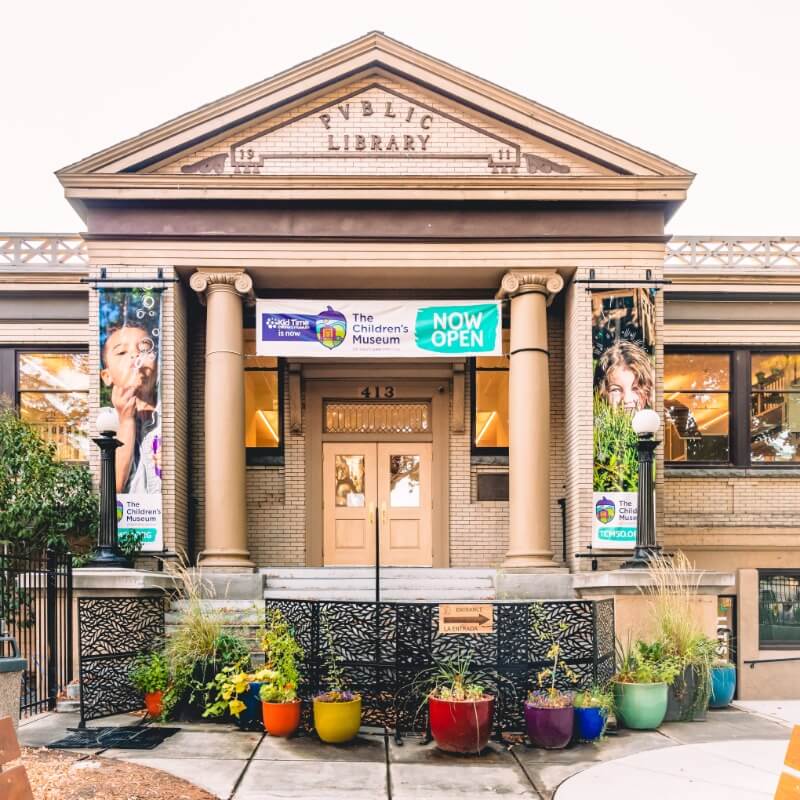
Library Park and the Carnegie Library reflect Medford’s early commitment to education, culture, and public gathering spaces.
Completed in 1912 with funding from philanthropist Andrew Carnegie, the library was Medford’s first permanent public library building. Its Classical Revival architecture and prominent entrance reflect the importance of education to the growing city.
The surrounding park also carries a special history. The Greater Medford Club, a women’s civic organization established in 1903, helped beautify the grounds with landscaping, benches, and flowers. Its work contributed to the park’s enduring character.
Today, the former Carnegie Library houses the Children’s Museum of Southern Oregon, bringing a new generation of learning and discovery into one of Medford’s oldest civic landmarks.
Southern Pacific Passenger Depot
147 N Front St, Medford, OR 97501
Then: A railroad passenger station connecting Medford to the rest of the region.
Today: The Old Spaghetti Factory, a restaurant inside the former station.
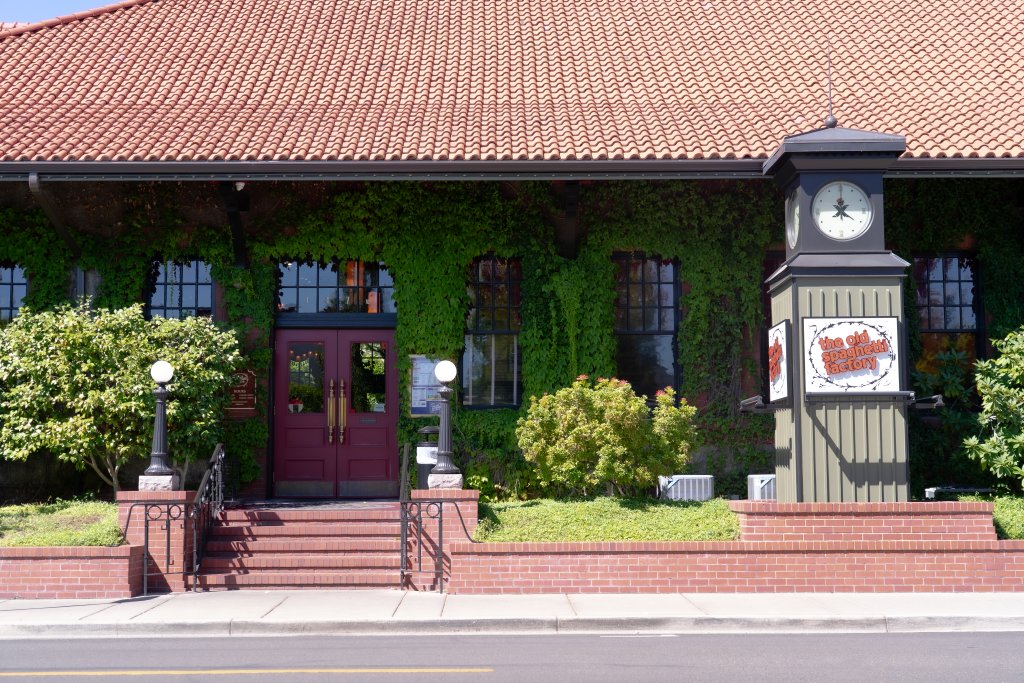
Few landmarks capture Medford’s origins quite like the historic Southern Pacific Passenger Depot.
Built during the city’s early 20th-century expansion, the depot welcomed travelers arriving by rail and helped connect the growing Rogue Valley to destinations across the West. It is the only surviving Southern Oregon example of the masonry passenger depots constructed by Southern Pacific along its north–south main line.
Hotel Barnum
204 N Front St, Medford, OR 97501
Then: A 42-room hotel constructed in 1915 to accommodate railroad travelers.
Today: A surviving historic commercial building near Medford’s former railroad hub.
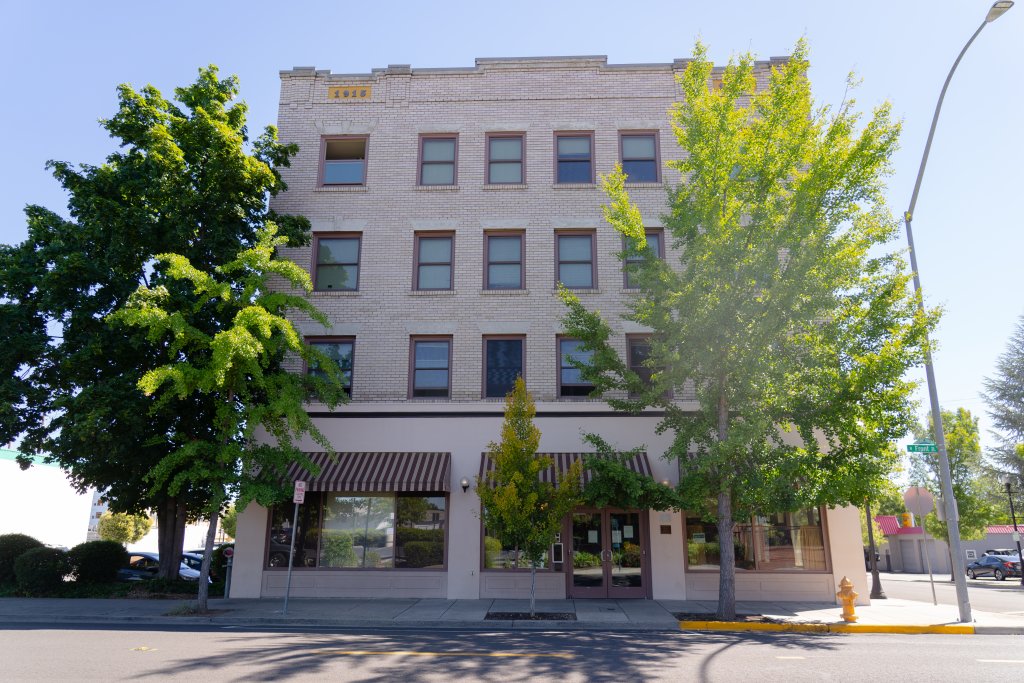
Designed by architect Frank Chamberlain Clark, the four-story Hotel Barnum was completed in 1915 near the busy railroad district. Its developer, W. S. Barnum, was also associated with the Rogue River Valley Railroad, which connected Medford and Jacksonville.
The building’s Chicago School-influenced architecture reflects a time when downtown hotels were essential gathering places for travelers, salespeople, and business visitors arriving by train.
Medford Elks Lodge
202 N Central Ave, Medford, OR 97501
Then: A grand fraternal lodge and social gathering place built in 1915.
Today: The Copper Plank, a pizzeria and pub built into a restored historic property.
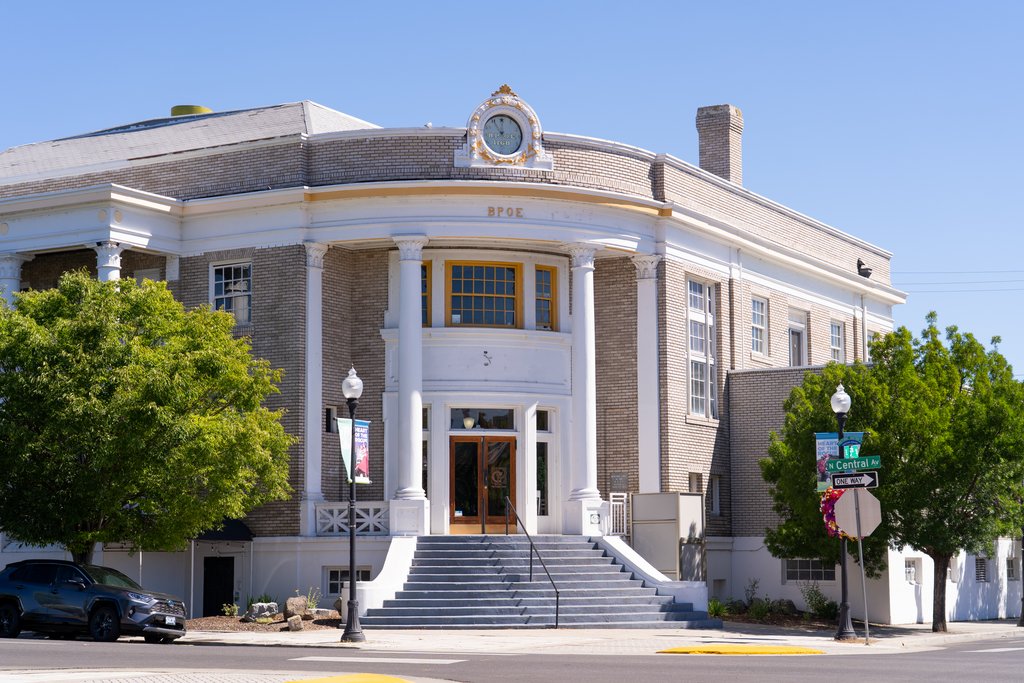
Designed by Frank Chamberlain Clark, the Medford Elks Lodge was once one of downtown’s most impressive buildings. Its classical architectural details reflected the prosperity and civic pride of early 20th-century Medford.
For decades, the lodge served as a gathering place for members of the Benevolent and Protective Order of Elks. Following years of declining use, the property was purchased for restoration in 2018.
Now known as The Lodge on Central, the building represents ongoing efforts to preserve Medford’s historic architecture while finding new uses for its landmark spaces.
Southern Oregon Historical Society
106 N Central Ave, Medford, OR 97501
Then: A J.C. Penney department store that served downtown Medford shoppers for decades.
Today: Home to the Southern Oregon Historical Society, including its research library and archives, with a new cultural event center in development.
Located at 106 North Central Avenue, the Southern Oregon Historical Society building offers a fascinating glimpse into Medford’s retail history. J.C. Penney first arrived in Medford in 1927, taking over the former Golden Rule department store. As the city grew, the retailer expanded into a new, modern department store in 1948, featuring distinctive Streamline Moderne architecture, curved windows, and an eye-catching facade.
For decades, J.C. Penney was a cornerstone of downtown shopping before relocating to the Rogue Valley Mall in 1986. The historic building later became home to the Southern Oregon Historical Society, which preserves the region’s history through photographs, documents, artifacts, and extensive archives.
Today, the organization is working to give the landmark another chapter through a cultural event center, bringing new opportunities for community gatherings and historic discovery to downtown Medford.

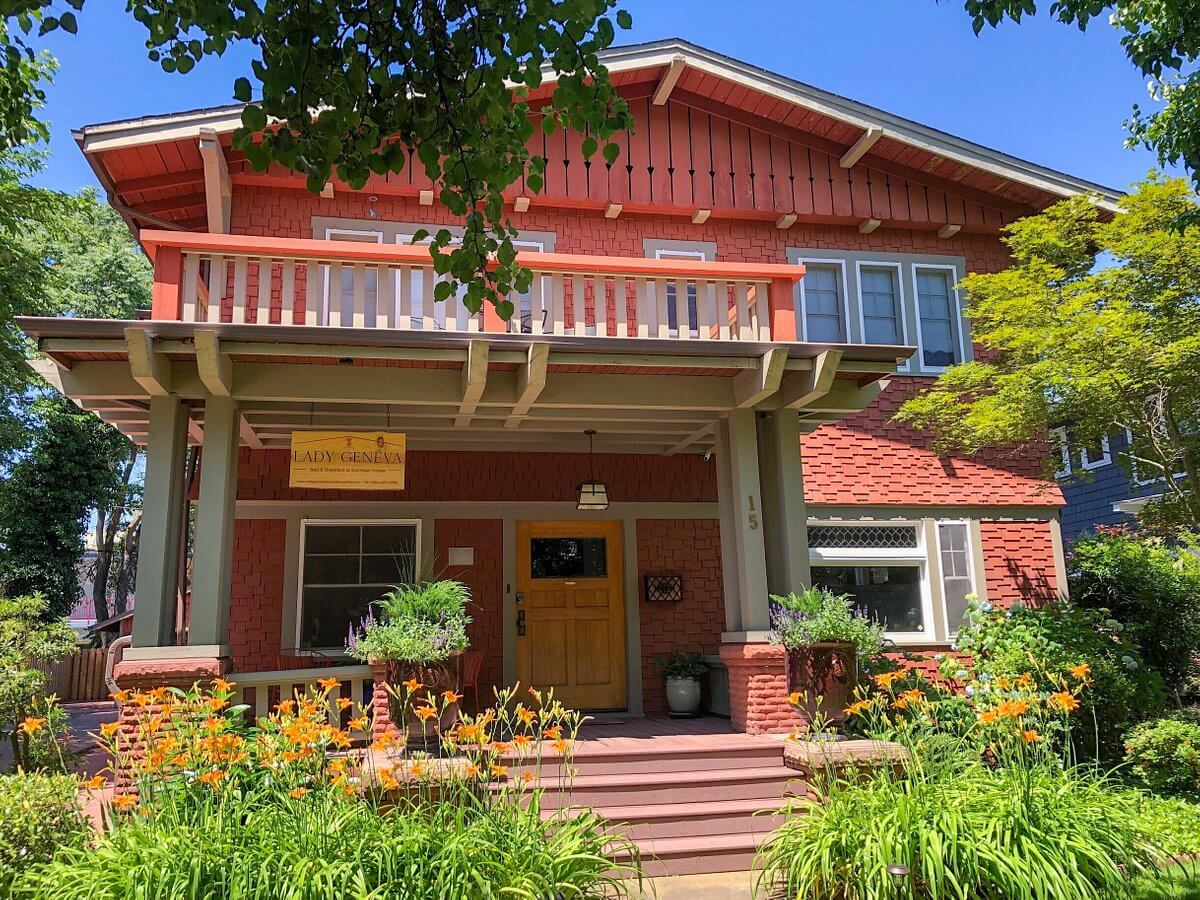
Lady Geneva Bed & Breakfast
Then: The G. L. and Florence Buhrman House, a private Craftsman-style residence built in 1914.
Today: Lady Geneva Bed and Breakfast, a boutique bed-and-breakfast.
At 15 Geneva Street, the beautifully preserved Buhrman House offers visitors an opportunity to experience Medford’s history firsthand.
Originally constructed as a private residence during the city’s Orchard Boom era, the home features classic Craftsman architecture and carefully preserved period details.
Today, Lady Geneva Bed & Breakfast welcomes overnight guests into its historic rooms, blending the charm of the early 1900s with modern comforts. It’s a particularly memorable accommodation for travelers interested in architecture, history, and exploring downtown Medford on foot.
Experience the Past, Discover the Present
From the arrival of the railroad to the height of the Orchard Boom, Medford’s history is a story of transformation, resilience, and community.
Today, the city’s historic buildings and neighborhoods offer more than a glimpse into the past. They’re places where visitors can enjoy a show, discover local businesses, admire architecture, and experience the culture that continues to shape the Heart of the Rogue.
Whether you’re spending an afternoon exploring downtown or planning an entire Southern Oregon getaway, make time to discover the stories that make Medford unique.
Your next adventure might just be a walk through history.